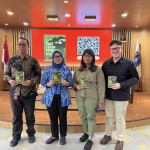

Photo Credit: Koalisi Seni
Jakarta, 17 December 2025 – Indonesia’s music festival industry has expanded rapidly in recent years, becoming an important driver of creative expression, youth culture, and local economies. Alongside this growth, however, many festivals continue to rely on practices that contribute to carbon emissions, waste generation, and intensive resource use. Sustainability initiatives in the sector have often been fragmented, with organizers facing limited access to practical, locally relevant guidance.
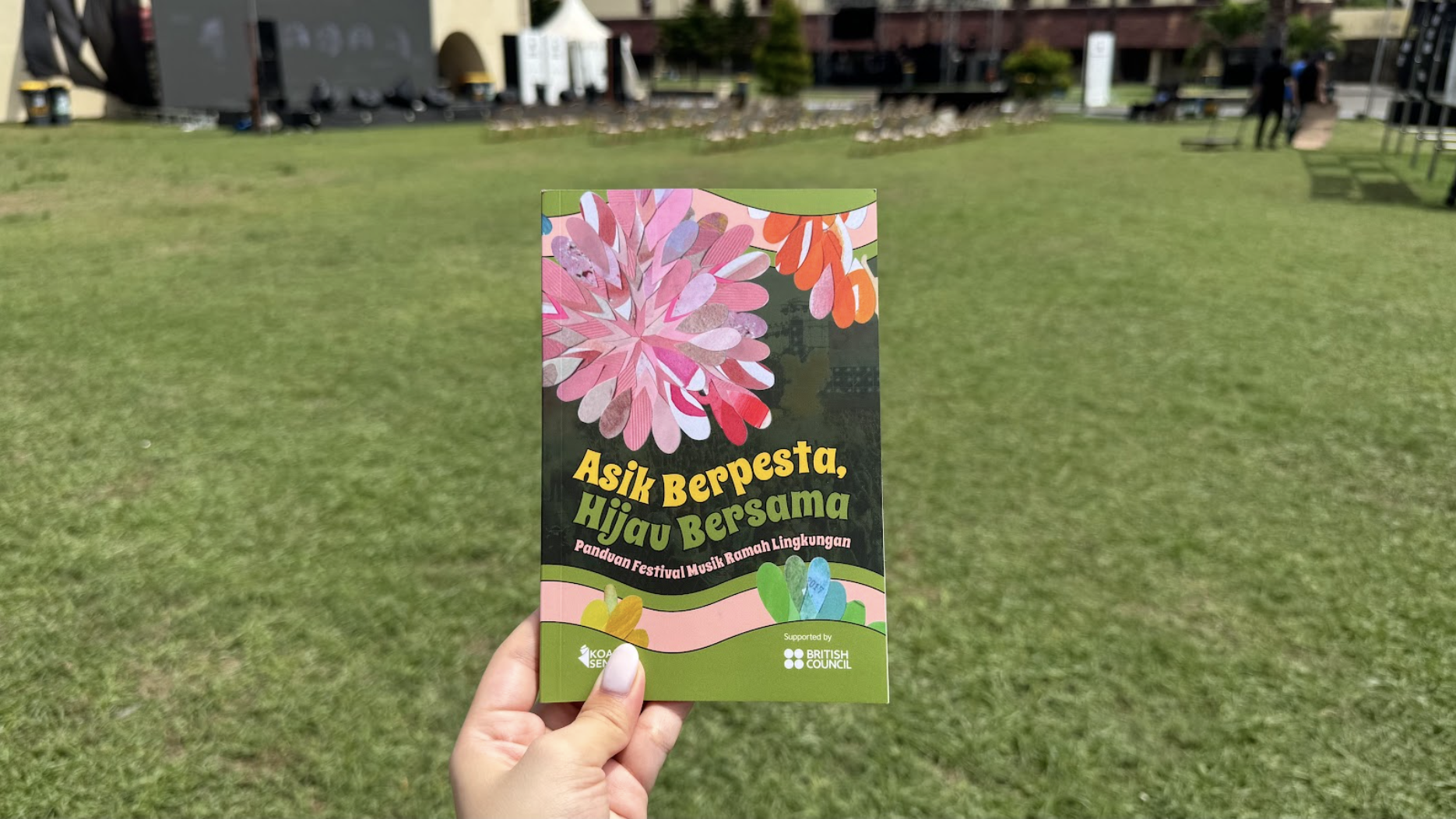
In response, Koalisi Seni, in collaboration with Kopernik and with the support of the British Council, developed ‘Groove Green Together: A Guide to Environmentally Friendly Music Festival’, a guidebook designed to support music festival organizers in adopting more environmentally responsible practices. The guidebook offers actionable and cost-effective steps tailored to the Indonesian context, with the aim of reducing environmental impact while sustaining a vibrant and inclusive music ecosystem.
Groove Green Together provides a practical guide grounded in general principles to reduce emissions, minimize waste, promote inclusivity, ensure economic sustainability, and create long-term impact. The guidebook is intended for organizers of different scales, from community-based events to larger commercial festivals, and is designed to be used as a planning and decision-making reference.
The guidebook includes an actionable toolkit that consists of steps for the delivery of artworks and logistics, energy use, travel and transportation, waste management, production and publication materials, food and beverages, outreach and audience engagement, as well as office operations that support festival implementation. The guidebook also features examples of good practices that have already been implemented by festivals and cultural events in Indonesia, alongside global examples, offering concrete illustrations of how sustainability measures can be applied in diverse contexts.
By focusing on realistic actions that can be integrated into existing workflows, the guidebook positions sustainability not as an additional burden, but as an achievable component of festival management that can also influence vendors, sponsors, artists, and audiences.
To ensure broad access and sector engagement, the guidebook was launched through a series of public discussions held in Jakarta and Makassar, bringing together music festival organizers, cultural practitioners, and environmental advocates.
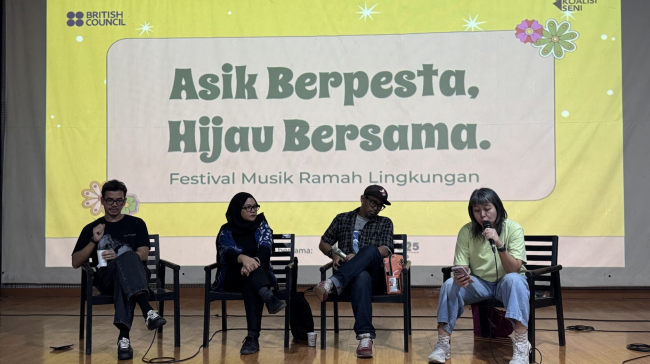
Photo Credit: Koalisi Seni
The first discussion was held on 20 September 2025 at Gudskul Hall, Jagakarsa, South Jakarta, and featured speakers Dita Kurnia (Festival Lestari), Ferry Dermawan (Joyland Festival), MG Pringgotono (Stuffo Gudrnd), and Ratri Ninditya (Koalisi Seni). The session focused on practical, low-cost approaches that can be implemented during festival preparation and production.
Ferry Dermawan of Joyland Festival highlighted that environmentally responsible practices are often perceived as costly, even though many solutions are simple and affordable when planned in advance. “There is a common assumption that environmentally friendly practices are always expensive. In reality, many small steps, such as reducing food packaging for crews or adjusting backstage catering, are easy, low-cost, and can be implemented immediately,” he said. He highlighted everyday practices such as reducing food packaging for crews and workers, coordinating catering systems that minimize single-use materials, and integrating waste separation into backstage operations.
The discussion also addressed persistent challenges related to waste management vendors and cost perceptions. Festival organizers shared experiences of navigating high service fees and limited control once waste leaves the venue, underlining the need for clearer monitoring mechanisms and stronger initiative from organizers themselves.
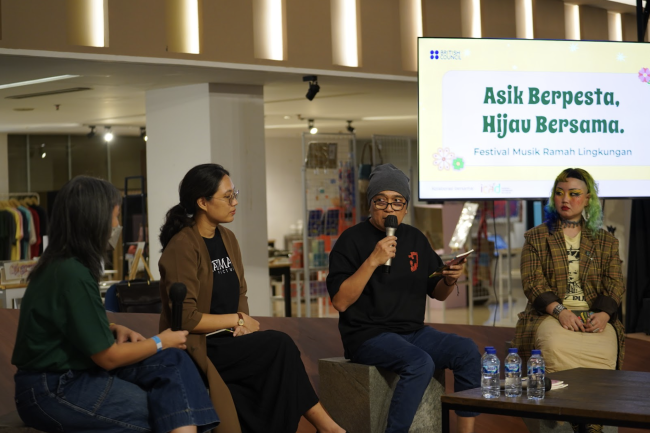
Photo Credit: Koalisi Seni
The second public discussion was held on 31 October 2025 at Grandkemang Hotel, South Jakarta, in collaboration with Indonesian Contemporary Art & Design (ICAD). Speakers included Mahatma Putri (Anatman Pictures), Itjuk Rahayu (ICAD), Alienpang (visual artist), and Ratri Ninditya (Koalisi Seni). The discussion expanded the conversation beyond music festivals, discussing how environmentally friendly practices can be effectively implemented in the creative workplace. The speakers argued that sustainability concerns not only the environment but also social relationships, production ethics, and the balance between profit and human values. Through their stories and experiences, they demonstrated that sustainable practices can begin with small decisions in the workplace and in everyday life.
Reflecting on the importance of mindful production and consumption, Mahatma Putri of Anatman Pictures emphasized awareness and responsibility in every stage of cultural production. “Wherever we are, we are always consuming. When we produce an event or a work, we need to pay attention to small details and carry them out consciously, being aware of the impact of every decision we make. This also means rethinking our actions and ensuring equality and diversity within our collective. Our principle is saving the world one video at a time,” she said.
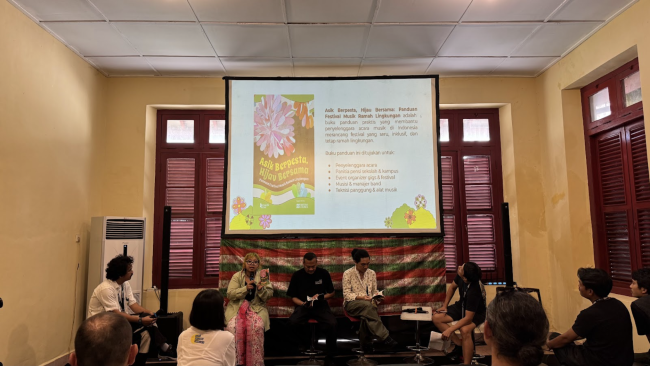
Photo Credit: Koalisi Seni
The third discussion took place on 1 November 2025 at Fort Rotterdam, Makassar, as part of the Rock in Celebes program. Speakers included Amalia Ikhlasanti (Koalisi Seni), Ardy Siji (Rock in Celebes), David Karto (Synchronize Festival), and Rachmat Mustamin (Makassar International Writers Festival), moderated by Zamzam Firzandy (Greenpeace Indonesia). The discussion highlighted the importance of collective action in advancing sustainability within cultural events.
Reflecting on the need for collaboration, David Karto noted that progress toward more sustainable festivals requires shared commitment across all stakeholders. “We must stay motivated to keep improving. This cannot stand alone; it has to be collective. All parties need to move together,” he said.
Beyond these discussions, the guidebook was also introduced at major platforms, including Synchronize Festival, UNDP Youth Empowerment Fest, and the Indonesia Music Summit, enabling dialogue with a wider range of stakeholders within and beyond the music sector.
Following the release of Groove Green Together, Koalisi Seni plans to continue promoting sustainable practices within the arts and culture sector. Future efforts may include expanding engagement with festival organizers, strengthening connections with environmentally responsible vendors, and exploring opportunities to adapt the guidebook’s approach for other cultural disciplines. By providing practical guidance and fostering dialogue across communities, Groove Green Together contributes to ongoing efforts to reduce the environmental impact of cultural events in Indonesia and to support a more sustainable future for the arts.
Written by: Margaret Megan