Photo: Koalisi Seni
Cultural policies require planning that reflects the conditions and needs of local communities. One of the key documents guiding this process is the Regional Cultural Policy Framework (Pokok Pikiran Kebudayaan Daerah, or PPKD), which outlines the current state of culture, its potential, challenges, and recommendations for cultural advancement at the regional level. This document serves as a reference for local governments in formulating policies and aligning cultural development planning with budget allocations.
Therefore, PPKD should not remain merely an administrative document. Its contents need to be regularly updated and reflect the actual challenges faced by local cultural ecosystems. The involvement of artists and cultural workers is essential, as they have firsthand experience of the cultural conditions in their respective regions.
However, not all arts practitioners are aware of the PPKD or have opportunities to participate in its development. To improve access, Koalisi Seni published a practical guidebook, PDKT sama PPKD: How Artists Can Successfully Intervene in Cultural Policy (only available in Bahasa Indonesia). The book helps artists and cultural workers understand the PPKD while identifying opportunities to participate in cultural policymaking and advocacy.
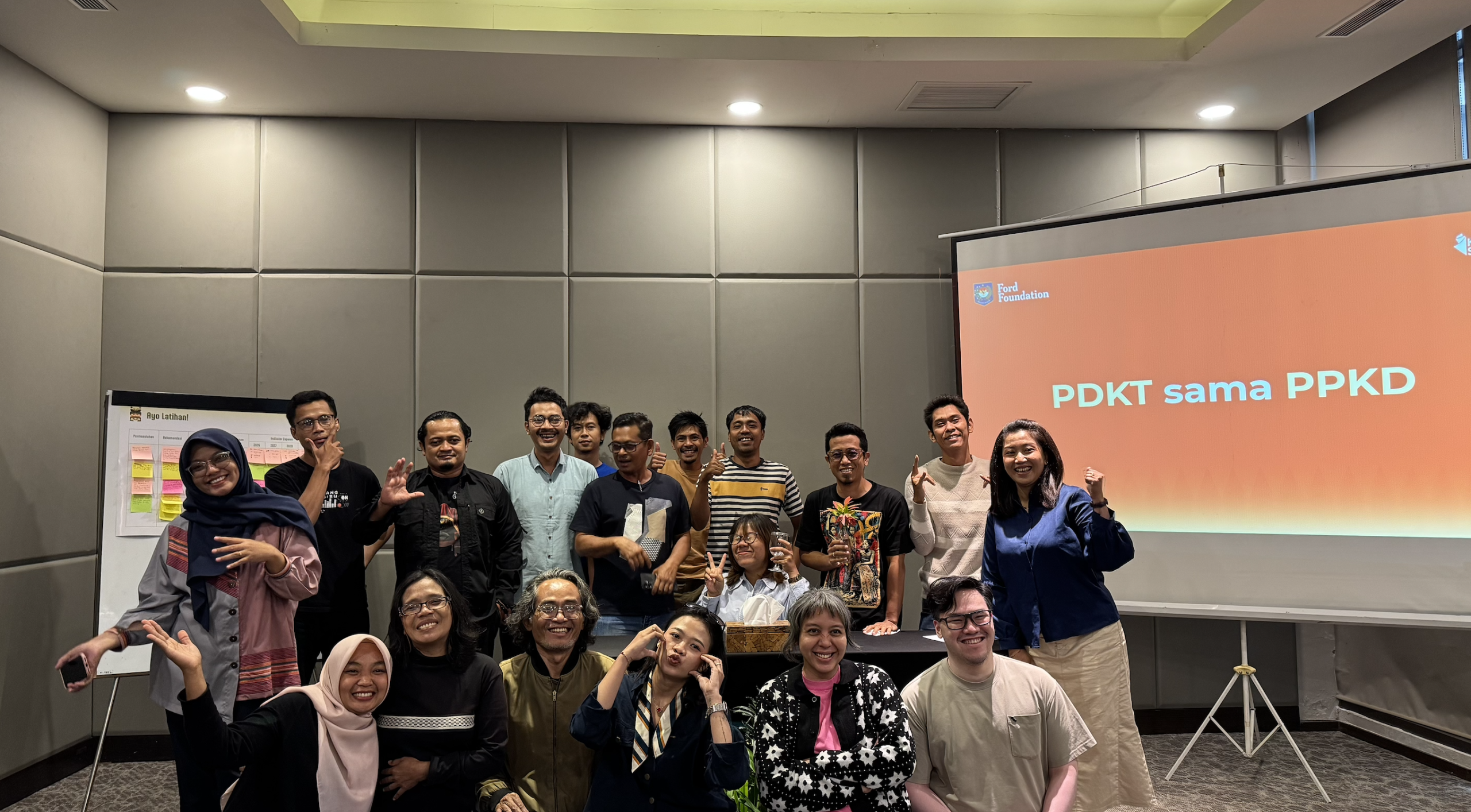
Throughout 2026, this knowledge was brought to three regions through a series of workshops titled PDKT sama PPKD: Kiat Sukses Seniman Intervensi Kebijakan Seni in Lampung, Central Sulawesi, and West Nusa Tenggara. The workshops brought together artists and cultural workers from various districts and cities to review existing PPKD documents, identify challenges, and develop policy proposals based on the needs of their respective regions.
Learning to Read the PPKD Critically
During the workshops, participants explored the role of the PPKD in cultural planning and learned how to critically assess the document. They evaluated the cultural data and conditions presented, identified key issues, and developed recommendations accompanied by objectives, target groups, implementation stages, and indicators.
The process also highlighted the importance of changing how the PPKD is understood. Artists should not only be involved as sources of data or subjects of cultural mapping, but also as stakeholders who can identify challenges and propose policy directions based on their own experiences.
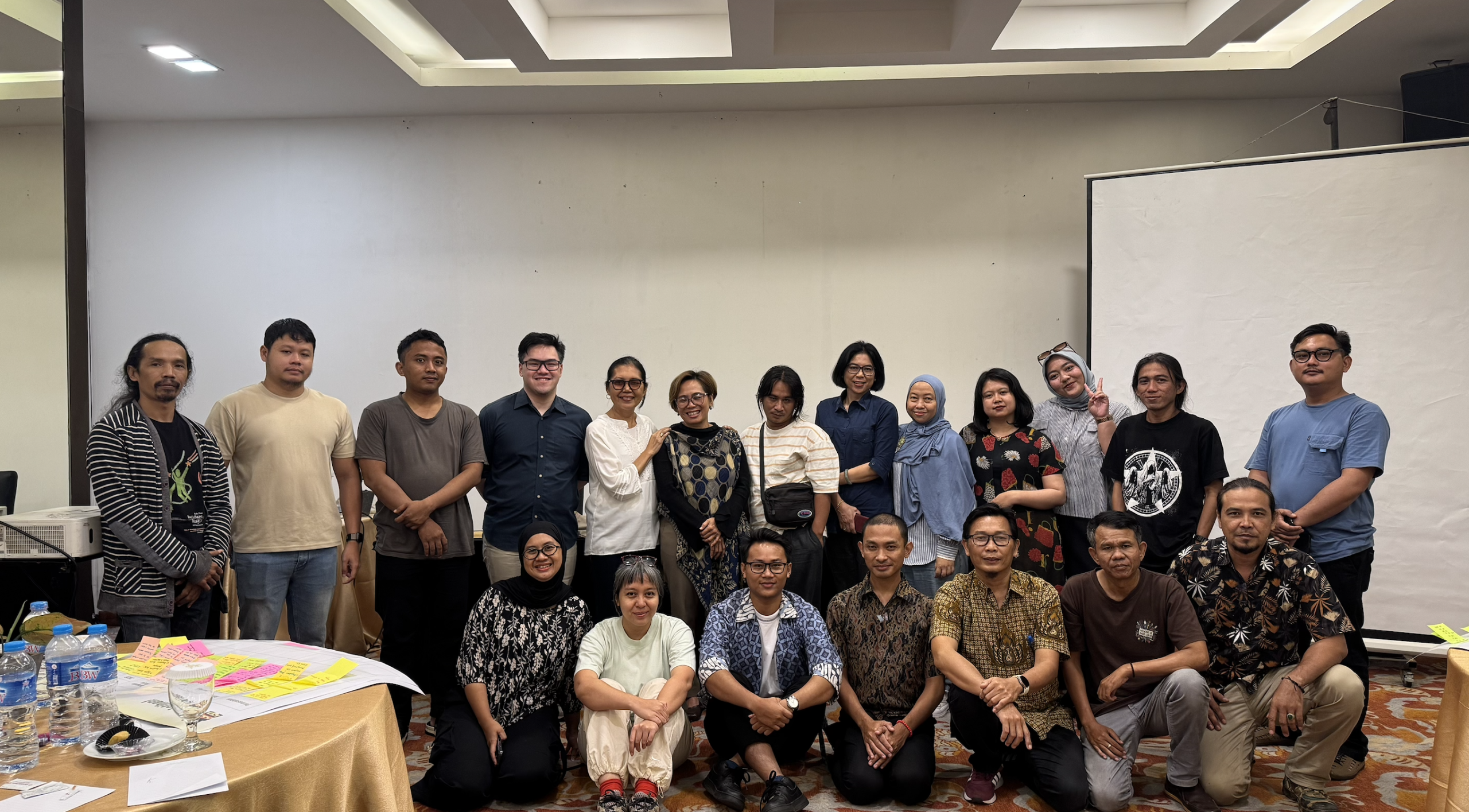
Photo: Koalisi Seni
In Lampung, participants found that PPKD updates had not been carried out consistently across the region. While some local governments were more active in updating their documents, recommendations in other areas were not yet sufficiently concrete to address cultural challenges. Participants also observed that relationships between local governments and arts practitioners influenced this process.
During meetings with local governments, participants discussed challenges in cultural governance, including limited cultural expertise among government officials and communication with arts practitioners that was not always effective. These findings demonstrated that strengthening the PPKD requires the involvement of both parties: artists and local governments.
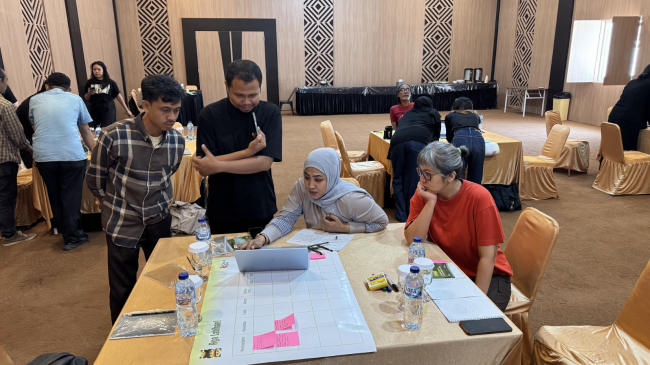
Photo: Koalisi Seni
In Central Sulawesi, the workshops demonstrated how the experiences of cultural practitioners could be translated into more concrete policy proposals. Participants from different districts and cities developed recommendations addressing the specific challenges in their respective areas.
For example, in Parigi Moutong, participants proposed strengthening artists’ welfare and protection, including through artist registration and capacity-building support. In Donggala, participants advocated for the archiving of artistic, cultural, and literary works, as well as greater involvement of artists in school-based learning. Meanwhile, participants in Palu discussed strengthening research and documentation of traditional knowledge, alongside promoting the use of the Kaili language in schools and public spaces. In Sigi, participants proposed mapping and digitising artists and their works, as well as documenting oral traditions.
These proposals demonstrate how the PPKD can serve as a platform for translating the concrete needs of arts ecosystems into policy recommendations, provided that cultural practitioners have the opportunity to participate and understand the process.
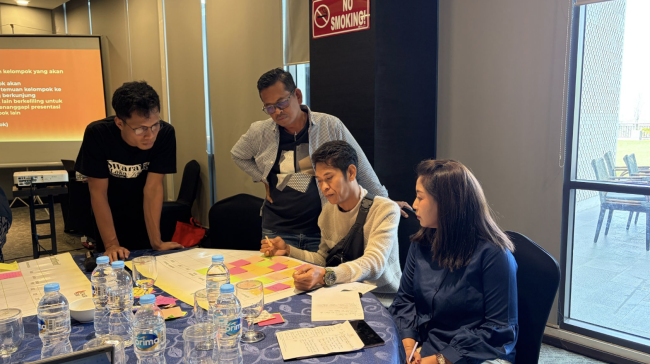
Photo: Koalisi Seni
In West Nusa Tenggara, the workshop brought together participants from five districts and cities with diverse backgrounds, including academics, cultural workers, and individuals who had previously been involved in PPKD development. This diversity of experience created an opportunity to revisit the role of arts practitioners in cultural planning.
The urgency of this discussion became even more apparent as several districts and cities in West Nusa Tenggara had yet to update their PPKD documents. For participants, updating these documents must go hand in hand with the involvement of cultural practitioners to ensure that the data and recommendations reflect the actual dynamics of culture in their regions.
Experiences from these three regions demonstrate that the challenges surrounding the PPKD go beyond whether or not the document exists. They also concern how the document is updated, who is involved in the process, how relevant its recommendations are, and whether those recommendations are actually incorporated into local government policy and budget planning.
It’s Time to Pay Attention to the PPKD
Artists’ involvement in the PPKD does not mean taking over the government’s role. Artists and cultural communities can serve as sources of knowledge and provide input based on their experiences and needs on the ground. At the same time, governments also need the involvement of cultural practitioners to ensure that policies are grounded in actual conditions.
Through its practical guidebook, PDKT sama PPKD: How Artists Can Successfully Intervene in Cultural Policy (only available in Bahasa Indonesia), and the series of workshops in Lampung, Central Sulawesi, and West Nusa Tenggara, Koalisi Seni encourages more arts practitioners to recognise the PPKD as an avenue for cultural advocacy.
These efforts should not stop in these three regions. Artists and cultural workers elsewhere can also begin by reviewing the PPKD in their respective regions: Has the document been updated? Are local cultural challenges adequately addressed? Have its recommendations been incorporated into local government planning?
For arts practitioners, understanding the PPKD means opening up opportunities to communicate their needs and help shape the direction of cultural policy in their regions.