
Photo: Freedom Film Network
15 April 2026 – As artists across Southeast Asia navigate censorship, political pressure, economic precarity, and emerging challenges from technology, protecting artistic freedom requires more than defending the right to create. It also means addressing the conditions that allow artists to sustain their work and respond to threats.
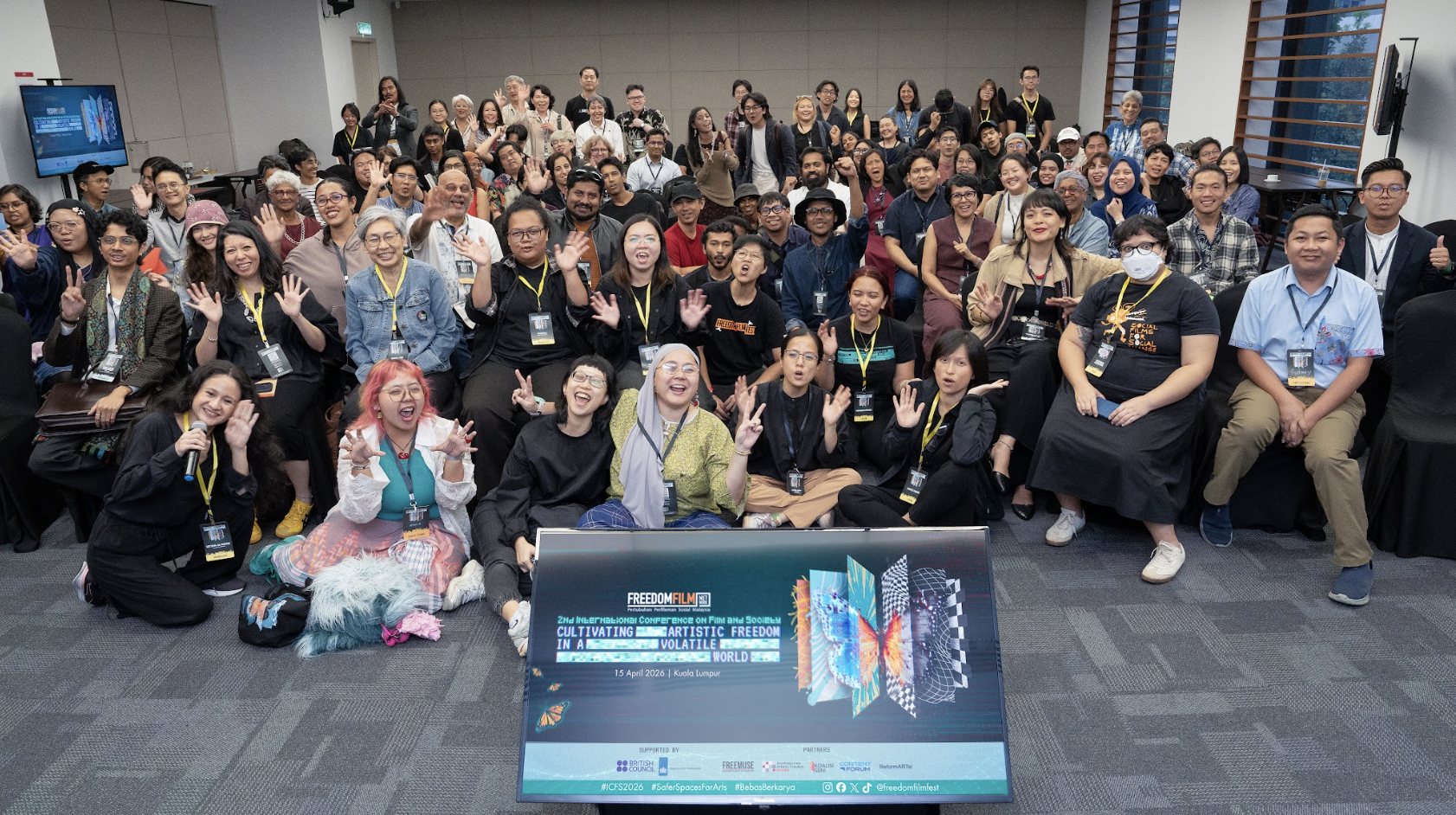
These issues were explored at the second International Conference on Film & Society, Cultivating Artistic Freedom in a Volatile World, hosted by Freedom Film Network on 15 April 2026 at the AICB Centre of Excellence in Kuala Lumpur. The one-day conference brought together artists, cultural workers, researchers, civil society organisations, and other stakeholders to examine emerging challenges to artistic freedom and develop collective strategies for protecting it.
Following the first conference in 2023, which focused on content creation, control, and choice in the digital age, this year’s programme expanded the conversation to censorship and geopolitics, artificial intelligence, artists’ livelihoods, self-censorship, and safety. Koalisi Seni contributed as one of the conference’s key partners alongside ArtsEquator and Freemuse, bringing perspectives from Indonesia’s experience in monitoring and advocating for artistic freedom.
When Livelihoods Affect Artistic Freedom
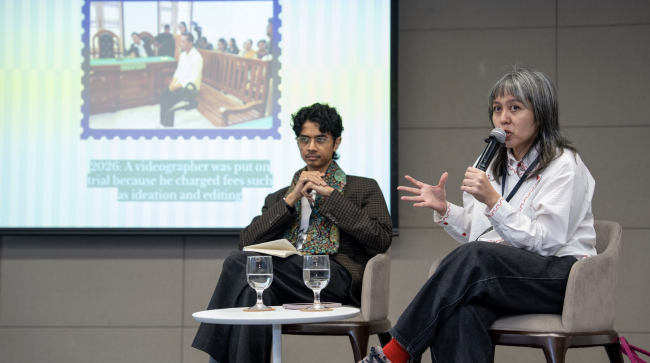
Photo: Freedom Film Network
In the session Protecting Artists’ Livelihoods, Ratri Ninditya, Coordinator for Research at Koalisi Seni, highlighted an often-overlooked dimension of artistic freedom: the economic conditions under which artists work. “Every single case of violations has an economic dimension to it,” Ratri said.
Koalisi Seni has monitored artistic freedom since 2020, with its database reaching back to 2010, and has documented around 400 cases. Ratri emphasised that economic concerns are present across these violations. When artists lack stable income, employment protections, or recognition of their labour, economic vulnerability can make it harder for them to resist censorship, harassment, or other forms of pressure.
One example was the case of Amsal, a videographer who was brought to trial after a local government questioned costs in his project budget for activities such as ideation and editing. The case highlighted how creative labour can be reduced to its final output, leaving the work and time behind that output unrecognised.
Women and queer artists face multiple vulnerabilities. Ratri shared the case of a female DJ who was sexually harassed by an audience member and subsequently lost her job after attempting to respond to the incident. Her experience demonstrated how the loss of economic security can itself become a mechanism of silencing.
Yet artists also develop collective strategies to survive where formal protections are inadequate. Ratri shared the example of Ludruk Tobong, an East Java theatre group led and performed by trans women. Beyond staging performances, the group provides housing and care for members while developing livelihood strategies and relationships within its local community. The example shows how artistic practice can be intertwined with care work, advocacy, and everyday survival.
Turning Knowledge into Practical Tools
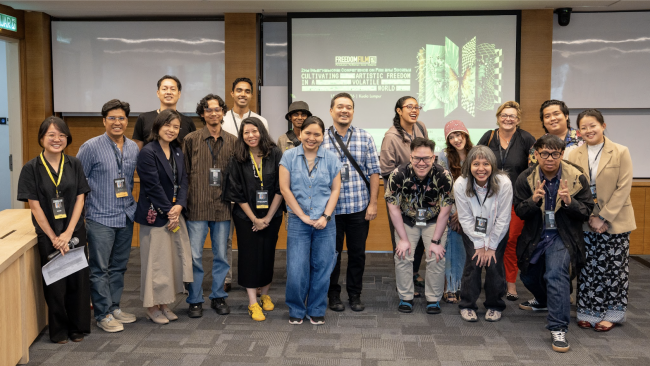
Photo: Freedom Film Network
Koalisi Seni’s contribution also extended from documenting violations to equipping artists with practical tools to respond to them.
Ratri and Hafez Gumay, Advocacy Manager at Koalisi Seni, led the Artistic Freedom Monitoring Tools workshop, introducing participants to Koalisi Seni’s methodology for identifying and documenting artistic freedom violations. Participants explored how to identify key elements of an incident, gather supporting evidence, and identify organisations that can provide assistance.
They also led Safety of Artists 101: Creating a Risk Mitigation Plan, where participants learned how to identify, assess, and reduce risks associated with artistic work, including legal threats and social pressure.
Koalisi Seni’s contributions brought together two sides of artistic freedom: understanding the conditions that make artists vulnerable, and developing practical ways to respond to those risks. By bringing Indonesia’s research and community experiences into a regional conversation, Koalisi Seni contributed to a broader effort to ensure that artists have not only the freedom to create, but also the conditions and support needed to keep creating.