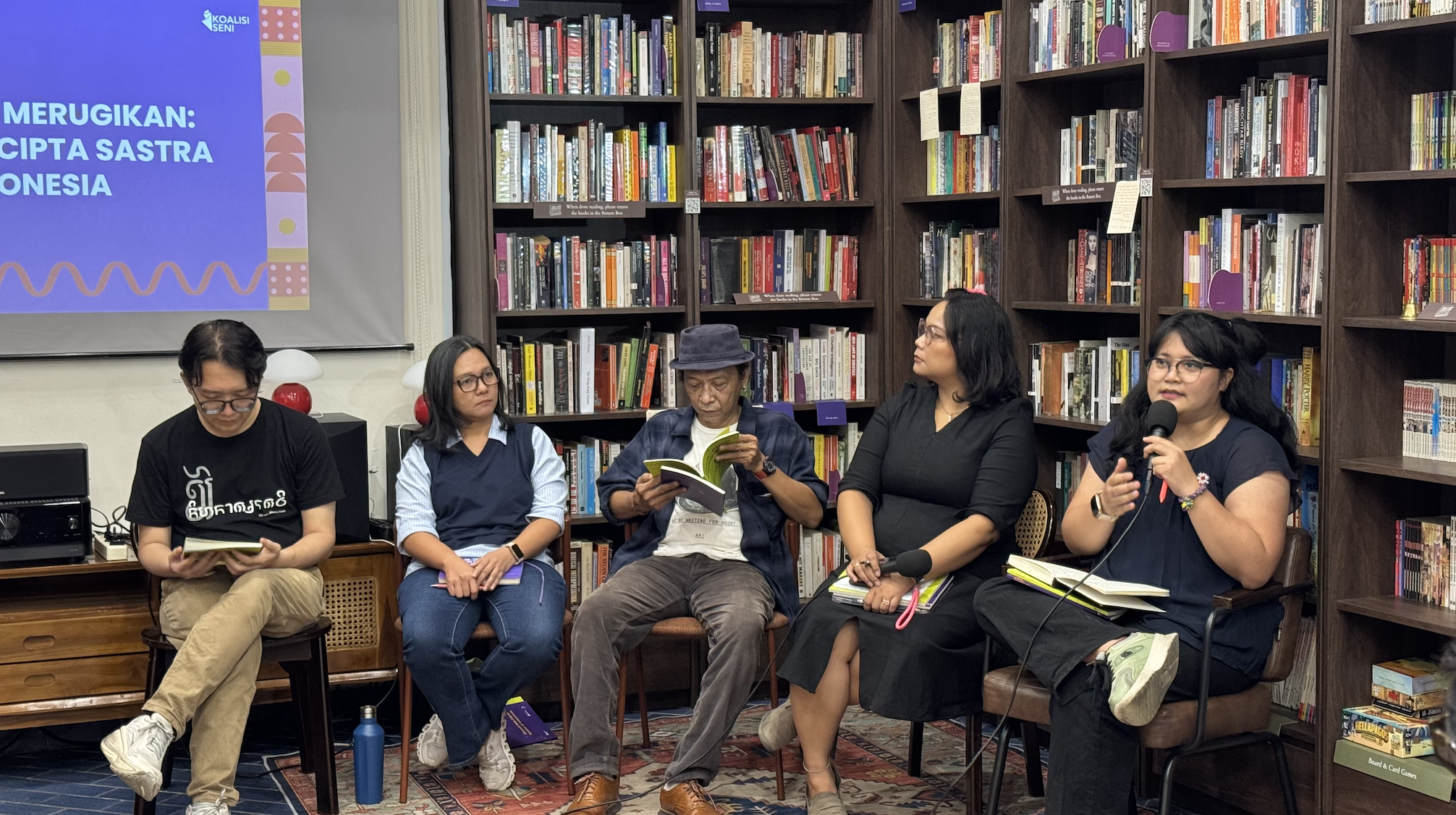

Photo: Koalisi Seni
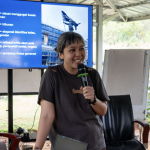
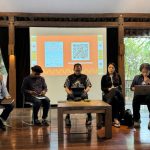
Jakarta, 31 July 2026 – Koalisi Seni held a public discussion titled “A Quiet Damage: The State of Literary and Theatre Copyright in Indonesia” at Margin Library & Third Space, South Jakarta. The event was part of a series of activities to disseminate findings from the research A Quiet Damage: The State of Copyright in the Arts in Indonesia, which was previously launched in June 2026. The discussion featured Martin Suryajaya (Literary Copyright Researcher), Selira Dian (Theatre Copyright Researcher), Ratih Kumala (Writer), Iswadi Pratama (Director and Playwright), and Sihol Pujiastuti Magdalena, S.H. (Head of the Intellectual Property Strengthening Team, Directorate of Intellectual Property Facilitation Development, Ministry of Creative Economy of the Republic of Indonesia). Through presentations of the research findings and dialogue with arts practitioners, the discussion explored various challenges in protecting copyright in the literary and theatre sectors, ranging from piracy and unauthorised use of works to adaptation practices, as well as the importance of contracts, licensing, and strengthening copyright literacy amid the development of digital technology.
Literature: Adaptation Creates Opportunities, but Copyright Governance Needs to Be Strengthened
The research findings show that technological developments have expanded the ways literary works are produced, distributed, and utilised across various new mediums. However, these opportunities have not always been accompanied by licensing mechanisms or copyright governance that provide fair protection and economic benefits for writers. Book piracy, outright buyout practices, and imbalanced contract negotiations remain significant challenges within Indonesia’s literary ecosystem.
Martin Suryajaya explained that the most common issues emerging in Indonesia’s literary ecosystem continue to involve piracy, as well as adaptation and the transformation of works into other media in ways that do not adequately protect writers. He said, “The most prominent, most frequent, and most urgent issue in the context of literature in Indonesia is piracy. There are also issues surrounding adaptation and the transformation of works into other media, which often results in writers being paid unfairly or even having their works bought out outright.”
Ratih Kumala also highlighted that an increasing number of young writers are becoming aware of copyright, but still lack access to information about licensing practices and contracts. She said, “Young writers, Gen Z writers, already have an awareness of these issues. They want to know about copyright, but they don’t know where to look for information. Sometimes they even ask very basic questions, such as, ‘How much is the usual rate?’ There isn’t even an answer to that. We don’t have a price list.”
The discussion highlighted that strengthening copyright literacy, increasing transparency in licensing practices, and building writers’ capacity to negotiate are important steps to ensure that the growth of the creative industry also strengthens creators’ ability to derive economic benefits from their works.
Theatre: Community Traditions and Copyright Awareness Still Need to Be Strengthened
Koalisi Seni’s research also found that theatre practices in Indonesia continue to rely heavily on community-based traditions and informal agreements. As a result, the use of contracts, documentation of works, and arrangements concerning economic and moral rights have yet to become common practices, meaning that the protection of works often depends on agreements between the parties involved.
Selira Dian explained that many of these issues stem from limited copyright awareness among theatre practitioners. She said, “In theatre, there are so many issues. People still lack awareness about copyright. Works are often used without permission. For example, a play script may be adapted—or not merely adapted, but actually altered and cut apart. The writer may not even know about it. And this is harmful not only economically, but also in terms of their moral rights.”
Responding to this issue, Iswadi Pratama emphasised that copyright concerns cannot be separated from strengthening the support systems within the theatre ecosystem. He said, “I believe copyright is not merely a normative or moral issue, but an institutional and systemic one. Poverty is not a reason for copyright to be disregarded. That is not an excuse.”
The discussion demonstrated that improving understanding of copyright needs to go hand in hand with strengthening professional practices in the theatre sector, including the use of contracts, documentation of works, and recognition of the contributions of all parties involved in the creative process.
Towards More Responsive Copyright Protection
Responding to the various issues raised during the discussion, Sihol Pujiastuti Magdalena emphasised that strengthening copyright protection requires collaboration among the government, arts communities, and cultural practitioners. According to her, the greatest challenge today is not only strengthening regulations, but also ensuring that the public understands and applies intellectual property protection in everyday practice. She said, “Everyone has to work together and sit down together. We need to find a way to ensure that intellectual property protection is not only known, but also implemented.”
Through this discussion, Koalisi Seni hopes that the findings of the research A Quiet Damage: The State of Copyright in the Arts in Indonesia can serve as a reference for strengthening copyright literacy, informing policy advocacy, and encouraging the development of an arts ecosystem that increasingly respects the moral and economic rights of creators.
Written by: Margaret Megan