
Photo: Koalisi Seni
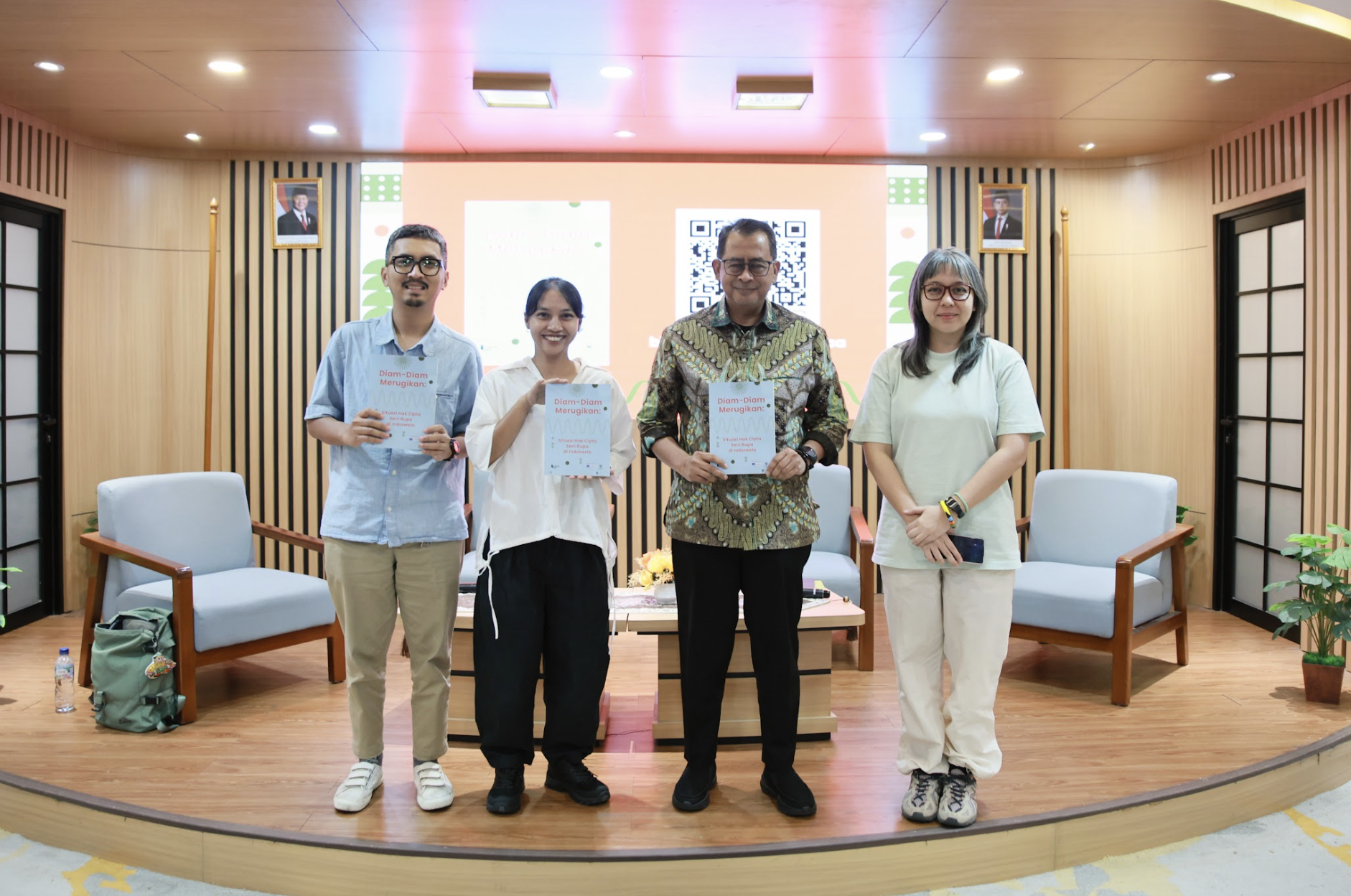
Jakarta, 17 June 2026 – Koalisi Seni launched the latest publications in its research series, A Quiet Damage: The State of Copyright in Indonesia’s Arts Sector, at Balai Sastra HB Jassin, Taman Ismail Marzuki, Jakarta. The launch formed part of an ongoing series of public discussions across artistic disciplines in response to the revision of Indonesia’s Copyright Law No. 28 of 2014.
Amid rapid digital transformation, artistic works can now be distributed more widely and more quickly than ever before. At the same time, however, copyright protection has not fully kept pace with these changes. This imbalance has had a direct impact on artists’ economic rights, including royalty transparency, fairer contractual and licensing practices, and recognition of creative works in digital spaces.
With the support of UNESCO Jakarta and the Korea Funds-in-Trust, Koalisi Seni has expanded its previous research initiative on the music sector to include five additional artistic disciplines: literature, dance, film, visual arts, and theatre. The research aims to provide a comprehensive picture of copyright challenges across the arts while laying the groundwork for more equitable policymaking. Irawan Karseno, Chair of Koalisi Seni, remarked, “There are still many aspects of copyright that remain poorly understood among arts practitioners. That is why discussion forums like this are increasingly important in strengthening collective understanding and awareness.”
Visual Arts: Unequal Distribution of Value and Weak Protection of Artists’ Economic Rights
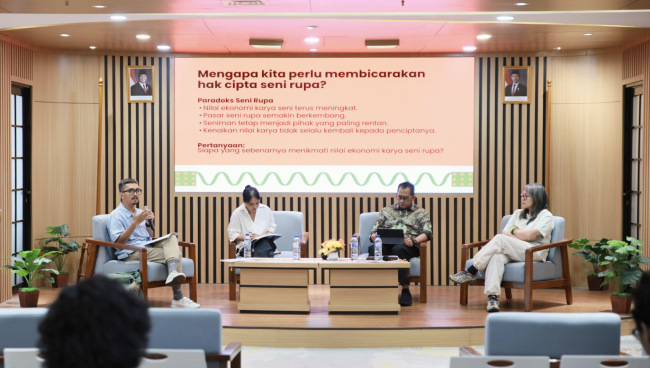
Photo: Koalisi Seni
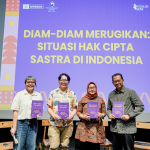
The visual arts discussion featured Chabib Duta Hapsoro (Visual Arts Copyright Researcher), Fiametta Gabriela (Visual Artist), and Dr. Agung Damarsasongko (Director of Copyright and Industrial Design, Ministry of Law of the Republic of Indonesia), moderated by Ratri Ninditya (Research Coordinator, Koalisi Seni). The discussion explored how the rapid growth of Indonesia’s visual arts ecosystem has not been accompanied by a fair distribution of economic benefits for artists. Despite the increasing market value of artworks and the expansion of distribution platforms, visual artists continue to occupy a relatively weak position in managing and benefiting from their copyrights.
Chabib Duta Hapsoro emphasized that copyright issues in the visual arts extend beyond protecting works from unauthorized reproduction or forgery. Rather, they are fundamentally connected to how value and power are distributed throughout the arts ecosystem. As he explained, “copyright is also about the distribution of profits, the distribution of value, and the distribution of power.” This perspective highlights that copyright cannot be separated from the structure of the art market itself, which determines who ultimately benefits economically from an artwork—from galleries and collectors to auction houses.
The discussion also highlighted a paradox within Indonesia’s visual arts sector. On the one hand, Indonesian artists are receiving increasing recognition both nationally and internationally, while the art market continues to expand. On the other hand, many artists receive little or no benefit from the appreciation of their works in the secondary market. The research found that the absence of a resale right mechanism means that profits from secondary sales are largely captured by other actors within the art market rather than by the artists themselves.
Drawing from her own experience, Fiametta Gabriela spoke about navigating various partnership models, contract negotiations, and profit-sharing arrangements that do not always work in artists’ favour. She explained that no consistent standards govern relationships between artists and galleries, including the division of sales revenue and production support. As a result, many artists bear significant financial risks throughout the creative process. She remarked, “Based solely on artwork sales, I still haven’t recovered my production costs.” Her experience illustrates how sustaining an artistic practice often depends on artists’ ability to secure alternative sources of income beyond the sale of their work.
Beyond remuneration, the discussion also pointed to limited copyright literacy and weak documentation practices within the visual arts sector. Many practitioners continue to rely on informal or gentleman’s agreements in professional collaborations. Meanwhile, documenting creative processes, recording artwork ownership, and maintaining provenance records have yet to become standard practice, despite their importance in preventing forgery, strengthening copyright protection, and ensuring better management of economic rights.
From the government’s perspective, Dr. Agung Damarsasongko explained that several issues identified in the visual arts research are already being considered as part of the ongoing revision of the Copyright Law. One such proposal concerns the introduction of resale rights, enabling artists to receive economic benefits when their works are resold in the secondary market. He stated, “The current draft bill already includes provisions on resale rights. We recognize that visual artists are not receiving fair economic benefits, and that makes this issue particularly important.” He also underscored the importance of establishing a collective management organization for the visual arts sector as part of broader efforts to strengthen the protection and management of artists’ economic rights.
Overall, the discussion demonstrated that copyright challenges in the visual arts extend beyond protecting creative works themselves to questions of fairness in how economic value is distributed. Strengthening copyright literacy, improving documentation standards, promoting more transparent contractual practices, and introducing resale rights are all essential steps toward building a more sustainable and equitable visual arts ecosystem.
Theatre: Between Community Traditions and the Challenges of Copyright Protection
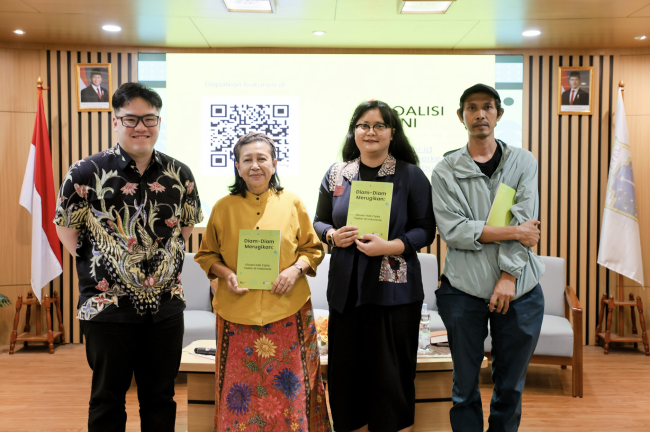
Photo: Koalisi Seni
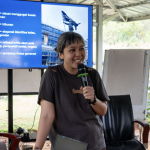
The theatre discussion featured Selira Dian (Theatre Copyright Researcher), Ratna Riantiarno (Founder and Manager of Teater Koma), Yustiansyah Lesmana (Theatre Committee, Jakarta Arts Council), and Hafez Gumay (Koalisi Seni). The discussion explored how theatre practice in Indonesia has grown out of strong community traditions while simultaneously facing significant challenges in understanding and managing copyright. Compared with other artistic disciplines that have undergone greater digital transformation, copyright remains a relatively unfamiliar concept for many theatre practitioners. As a result, unauthorized use of scripts, inadequate documentation, and weak protection of economic rights remain widespread.
Selira Dian explained that limited awareness of copyright in the theatre sector cannot be separated from the historical development of Indonesian theatre, which has traditionally functioned more as a space for education, artistic expression, and community engagement than as a cultural industry. She reflected, “In seventeen years of working in theatre, I had never once heard the term copyright.” Her research found that unauthorized use of scripts, alterations made without the author’s consent, and the widespread practice of photocopying scripts continue across theatre groups and educational institutions. According to her, these practices undermine not only the economic rights of playwrights but also the moral rights attached to their works.
The discussion also revealed gaps in the Copyright Law’s treatment of theatre. While playwrights receive relatively clear recognition as authors of creative works, the contributions of directors, artistic directors, stage designers, and other theatre professionals remain inadequately recognized under existing legal frameworks. Consequently, the protection of their rights often depends entirely on contractual arrangements negotiated during the production process.
Ratna Riantiarno shared Teater Koma’s experience of operating for nearly five decades within a spirit of community and mutual support. She observed that copyright has historically not been regarded as a priority within Indonesian theatre practice. “An understanding of copyright and intellectual property protection has never truly taken root as a fundamental value in our artistic life,” she explained. She noted that theatre groups have traditionally devoted most of their energy to ensuring productions could take place—from fundraising to managing performances—leaving the protection of creative works largely overlooked.
From the perspective of the theatre community, Yustiansyah Lesmana argued that most Indonesian theatre practitioners emerge from community-based traditions that prioritize loyalty, collective commitment, and artistic fulfilment over economic considerations or professional protection. “Most theatre practitioners in Jakarta come from community-based groups. The dominant values are loyalty, commitment, and non-material measures of success,” he said. As a result, discussions surrounding economic rights, employment contracts, and professional standards have yet to become central concerns within theatre practice. He therefore emphasized the importance of fostering greater awareness that artists are also cultural workers whose professional and economic rights deserve protection.
Alongside these challenges, the discussion also highlighted several emerging good practices within the theatre sector. The research identified initiatives such as the formal publication of scripts to reduce the culture of unauthorized photocopying, the development of digital archives during the COVID-19 pandemic, and production models that provide ongoing royalties to stage designers when their designs are reused. Several online performance platforms that emerged during the pandemic have likewise demonstrated new possibilities for distributing theatrical works while offering creators more transparent revenue-sharing arrangements.
Towards More Equitable and Inclusive Policies
The research findings demonstrate that copyright challenges cut across artistic disciplines and have become increasingly complex in the digital era. These include the need to strengthen copyright literacy, promote clearer contractual arrangements, reinforce professional organizations, and develop policies that respond more effectively to the needs of artists and cultural practitioners.
Through the research series A Quiet Damage: The State of Copyright in Indonesia’s Arts Sector, Koalisi Seni seeks to provide evidence-based data and analysis to strengthen policy advocacy while promoting a copyright protection system that is better equipped to respond to technological change.
As the digital ecosystem continues to evolve and new models of creative distribution emerge, Koalisi Seni hopes these research findings will serve as a foundation for more responsive policymaking while strengthening artists’ bargaining position in managing and receiving fair economic benefits from their creative works.
Written by: Margaret Megan