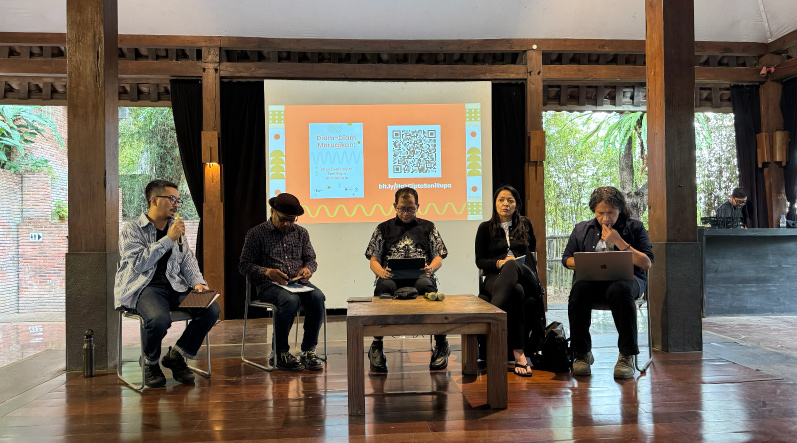

Bandung, 15 August 2026 – Koalisi Seni, in collaboration with Selasar Sunaryo Art Space, held a public discussion titled “A Quiet Damage: The State of Visual Art Copyright in Indonesia” at Selasar Sunaryo Art Space, Bandung. The event was part of a series of dissemination activities for the research A Quiet Damage: The State of Art Copyright in Indonesia, which was launched in June 2026.
The discussion featured Dr. Hermansyah Siregar, S.H., M.H. (Director General of Intellectual Property at the Ministry of Law of the Republic of Indonesia) as the keynote speaker, alongside Chabib Duta Hapsoro (Visual Art Copyright Researcher), Aminudin T.H. Siregar (Lecturer in Visual Arts at ITB), Syagini Ratna Wulan (Head of Development, Marketing, and Communications at Selasar Sunaryo), and Dr. Agung Damarsasongko (Director of Copyright and Industrial Design at the Ministry of Law of the Republic of Indonesia), with Heru Hikayat, Curator at Selasar Sunaryo, serving as moderator. The discussion explored various copyright issues within the visual arts ecosystem, from unequal distribution of economic value and the discourse surrounding resale rights, to the boundaries of copyright protection in artistic exploration and appropriation practices.
As the Value of Artworks Rises, Artists Remain Vulnerable
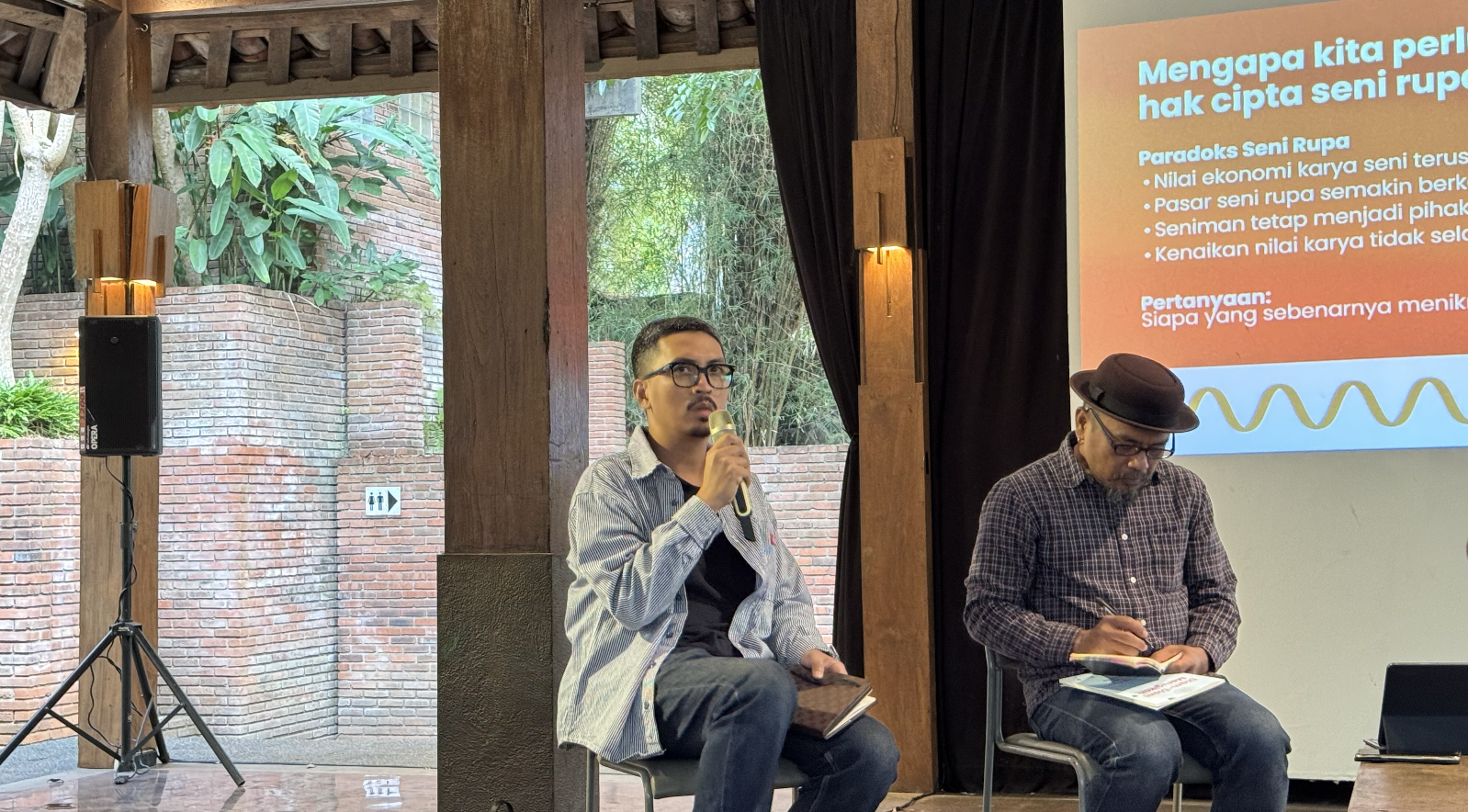
In his presentation, Chabib Duta Hapsoro highlighted a paradox within Indonesia’s visual arts ecosystem: the value of artworks continues to increase, while artists remain vulnerable when it comes to benefiting economically from their works. According to him, copyright issues cannot be separated from the unequal distribution of value and power within the visual arts ecosystem. “Artists are always the most vulnerable party, and fundamentally, their rights are not respected, either morally or economically,” he said.
Chabib emphasized that the issue is not limited to protecting artworks from reproduction or forgery, but also concerns how the economic benefits generated by an artwork are distributed among the various actors within the arts ecosystem. He therefore advocated for a number of measures, ranging from establishing a collective management organization for visual arts and implementing resale rights, to strengthening copyright literacy and promoting documentation and provenance practices for artworks.
Resale Rights and Copyright Protection
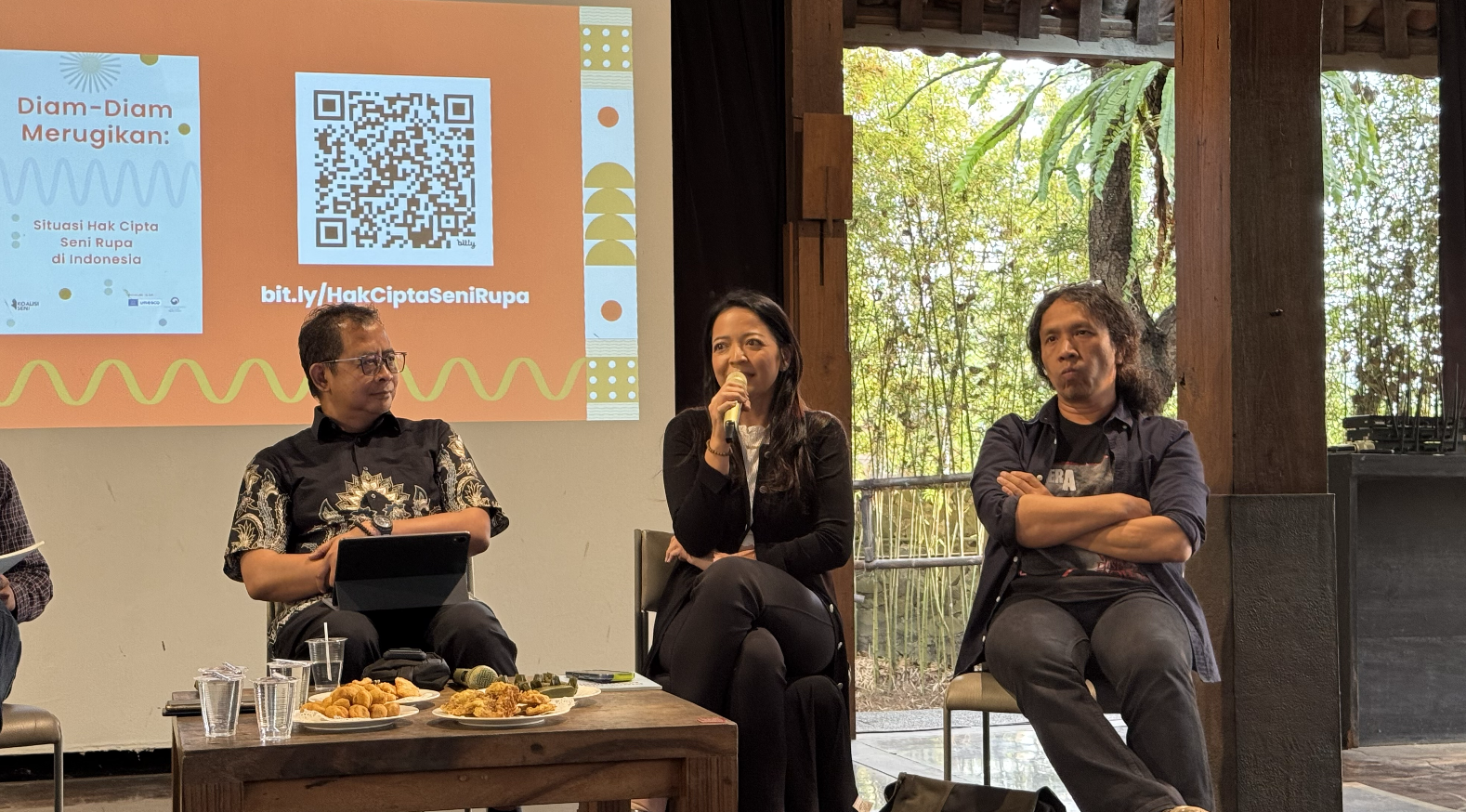
Responding to the research findings, Aminudin T.H. Siregar welcomed the effort to produce research on visual art copyright. He also noted that the implementation of resale rights needs to take into account the complexity of the visual arts ecosystem, which involves multiple actors, including gallery networks, collectors, auction houses, and the movement of artworks across time and national borders. “What we are actually dealing with is a transnational network, not a short-term relationship between artists, galleries, and auction houses,” he said.
From the perspective of an arts practitioner, Syagini Ratna Wulan questioned how copyright regulations could be implemented without restricting artists’ space for exploration, particularly in appropriation practices commonly found in visual art. “Does copyright regulation actually restrict us in our exploration?” she asked.
She shared her experience of having one of her works considered to be an imitation of another artist’s work, despite her having never known about the work beforehand. This experience highlights the importance of clarity around the boundaries between ideas and expression in copyright practice, so that legal protection can be enforced without becoming an obstacle to creativity.
Government Commitment to Strengthening Visual Art Copyright Protection
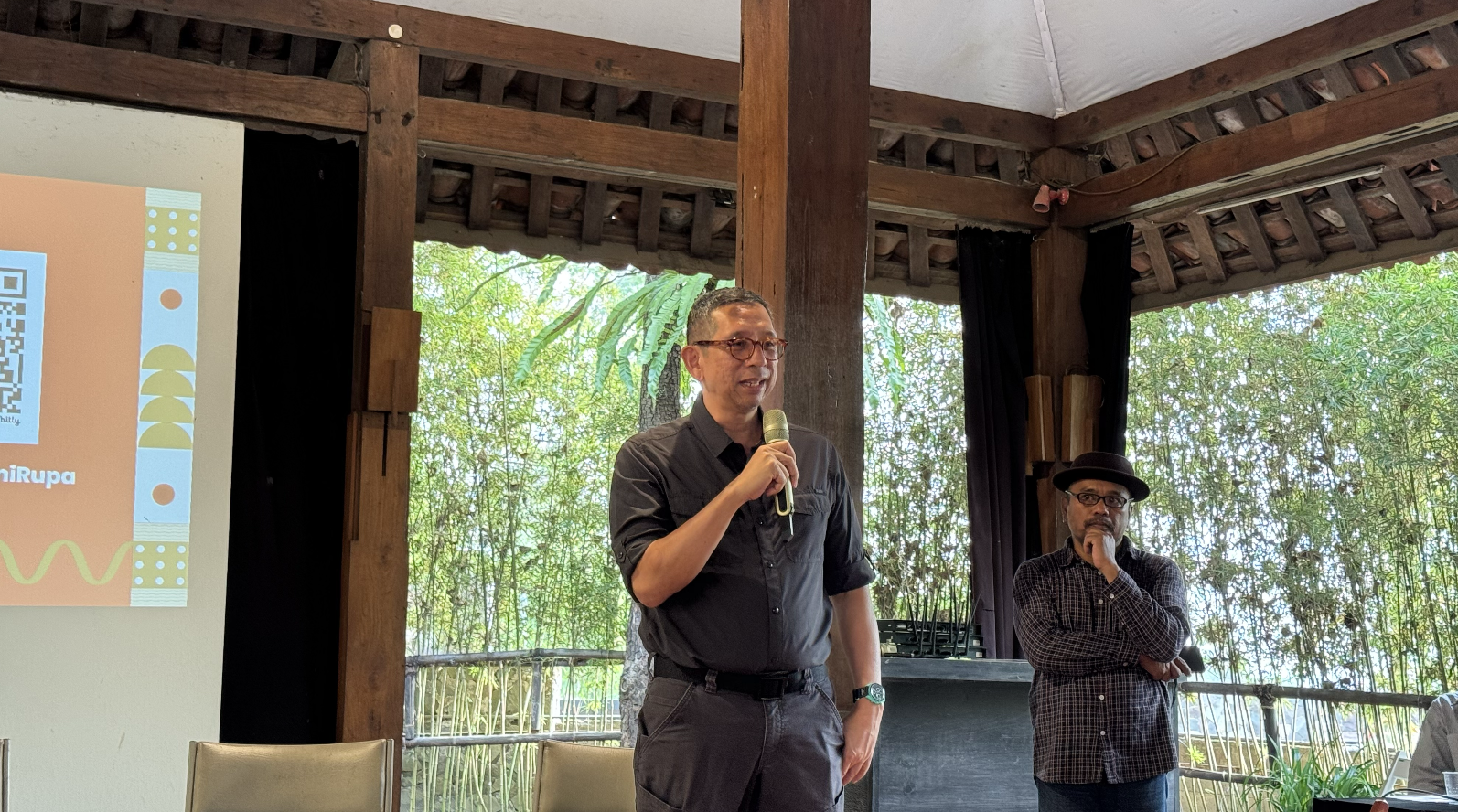
In his keynote presentation, Dr. Hermansyah Siregar expressed appreciation for Koalisi Seni’s research initiative and affirmed the government’s commitment to strengthening copyright protection in the visual arts sector, which he said has historically received less attention than the music sector. He emphasized that strengthening the visual arts ecosystem requires collaboration between the government and ecosystem stakeholders. “There are several things that the government must do, but they must also be done by our colleagues in the sector—it is important that we build this ecosystem together,” he said.
One of the issues highlighted was the absence of a mechanism that allows creators to continue receiving economic benefits when their works change hands in the secondary market. The government is therefore seeking to introduce resale rights through revisions to the Copyright Law. “From the perspective of visual art, material benefits are currently received only once, namely at the first sale. After that, the owner or copyright holder should continue to receive royalties every time the work changes hands,” he said.
The government also expressed its readiness to support the establishment of a collective management organization for the visual arts. “We are willing to support and facilitate [the process] if you wish to establish a collective management organization in the visual arts sector,” he said. The government also plans to propose to the Minister of Finance that registration fees for visual artworks be waived, following a similar policy already implemented in the music sector. “We will submit a request to the Minister of Finance for this to become zero rupiah,” he said.
Addressing the boundaries of copyright protection in creative practice, Dr. Agung Damarsasongko explained that copyright law does not fundamentally restrict creativity because it protects the form of expression rather than the idea itself. “Copyright does not protect ideas, but protects the expression of an idea,” he said.
This explanation provided important context for the discussion around appropriation practices and potential overlaps between artworks. Agung also outlined several government initiatives, including the development of a database of visual artworks and an intellectual property-based financing scheme (IP financing) currently being developed in collaboration with the banking sector.
Towards a More Equitable Visual Arts Ecosystem
The discussion demonstrated that strengthening copyright in the visual arts sector requires not only more responsive regulations, but also stronger literacy, documentation, contracting practices, and mechanisms for managing economic rights. At the same time, the characteristics and ecosystem of visual art differ from those of music, meaning that copyright regulations cannot be applied uniformly or simply adapted from mechanisms used in the music sector. Policies need to take into account the nature of artworks, transaction patterns, and the relationships among artists, galleries, collectors, auction houses, and other parties involved in the circulation of artworks. The various perspectives raised during the discussion also demonstrated that copyright issues are closely connected to how the value and economic benefits of artworks are distributed within the visual arts ecosystem.
Through this discussion, Koalisi Seni hopes that the findings of the research A Quiet Damage: The State of Visual Art Copyright in Indonesia can continue to serve as a reference for strengthening copyright literacy, informing policy advocacy, and promoting a visual arts ecosystem that increasingly respects the moral and economic rights of creators.
Written by: Margaret Megan